
Bullitt County Criminal Court Cases
Bullitt County uses Kentucky's unified county court system. The Bullitt County Court of Justice places felony trials in the 55th Circuit Court. District Court handles misdemeanors, violations, traffic cases, and the first stages of felony matters. Both sit at the Bullitt County Judicial Center, 250 Frank E. Simon Avenue in Shepherdsville. A city arrest in Mount Washington, Shepherdsville, or Hillview does not create a separate municipal criminal archive. The resulting prosecution is found in the county District or Circuit file.
The Office of Circuit Court Clerk is the court-record custodian. It maintains citations, complaints, indictments, motions, orders, docket entries, judgments, sentences, and related payment entries. Felony research should be directed to Circuit Criminal. Misdemeanor, traffic, and preliminary felony records go to District Criminal. This division matters because the arresting agency and detention center create different records. A booking confirms custody and intake charges; the court case shows what prosecutors filed and what the judge did.
Searching Bullitt County Case Records
Kentucky's public “Find a Case” route is mainly for court-date information. It is not a complete public CourtNet name-search database. For the official Bullitt County criminal court case, begin with the clerk. The statewide Request Court Records page also explains that county clerks maintain local case files and can route older records to the proper storage facility.
- Decide whether the Bullitt County matter belongs in District Criminal or Circuit Criminal.
- Call the matching menu and provide the case number, or give a name and estimated filing year.
- Ask the clerk to confirm the court division, case status, and whether the file is onsite.
- Inspect the docket and requested documents at the clerk's counter, noting redactions or restricted items.
- Order a plain or certified copy as needed, after the clerk confirms availability and the current charge.
A focused request is faster than asking for every record tied to a name. These identifiers help the clerk distinguish similar parties and locate the exact Bullitt County court file.
| Request field | Format | Required | Use |
|---|---|---|---|
| Case number | Number | No, if unknown | Best direct locator for the court file |
| Party name | Text | Usually | Helps identify a case when no number is known |
| Court division | District or Circuit | Helpful | Routes the request to menu 3 or menu 4 |
| Filing year | Year | No | Narrows similar names and older matters |
| Copy type | Plain or certified | For copies | Tells the clerk what form of record is needed |
CourtNet Is Not Bullitt's File
CourtNet is Kentucky's court case-management database, yet a database entry is not the full Bullitt County case file. The Administrative Office of the Courts warns that statistical snapshots are not real-time and may reflect routine delays or errors. A search result may omit a recent event, while the clerk's docket and signed order provide the controlling source. This is especially important when the arrest charge later changed, the prosecutor dismissed a count, or the court entered a different disposition.
An official 2024 AOC report illustrates the difference between data and documents. Through December 16, it counted 1,443 original or amended Circuit criminal charges across 414 Bullitt County cases. One case may have several charges, and one person may have several cases. Those figures are not people, convictions, victims, or a county crime rate. Use the report for system context, then verify any individual court case with the live clerk file.
Inside a Bullitt County Case File
A Bullitt County criminal case file can contain a citation or complaint, an indictment in a felony case, pleadings, motions, orders, reports, evidence references, docket sheets, video material, or transcript records. Public availability varies by document. The most useful fields trace the matter from filing through disposition, rather than freezing it at the first accusation.
| Case number and court | Identifies the Bullitt County division, case, and official file. |
|---|---|
| Charging document | Shows the filed accusation, statute or UOR code, and later amendments where recorded. |
| Docket entries | List filings, hearings, motions, orders, and other case events. |
| Hearing dates | Show scheduled and completed court appearances and the next listed event. |
| Disposition and judgment | Record whether a charge was convicted, dismissed, diverted, acquitted, or otherwise resolved. |
| Sentence and conditions | Describe the court-ordered term, probation, restitution, or other recorded conditions. |
Sensitive identifiers, protected victim details, and juvenile material may be removed from public copies. Ask for the final judgment or disposition when the goal is to learn the outcome. That document carries more weight than a booking label or an old calendar entry.
Kentucky UOR Codes in Bullitt Cases
Kentucky uses seven-digit Uniform Offense Reporting codes. The first six digits identify the charge. The seventh digit adds context: 0 means the primary offense, 1 attempt, 2 solicitation, 3 conspiracy, 4 facilitation, 5 complicity, and 6 enhancement. An “*obs” label means obsolete. Reading that last digit helps explain why two Bullitt County docket lines with similar text are not necessarily the same legal allegation.
The Kentucky Penal Code gives the statutory framework behind many criminal charges. Its official page is shown below as a source for checking current classification language.
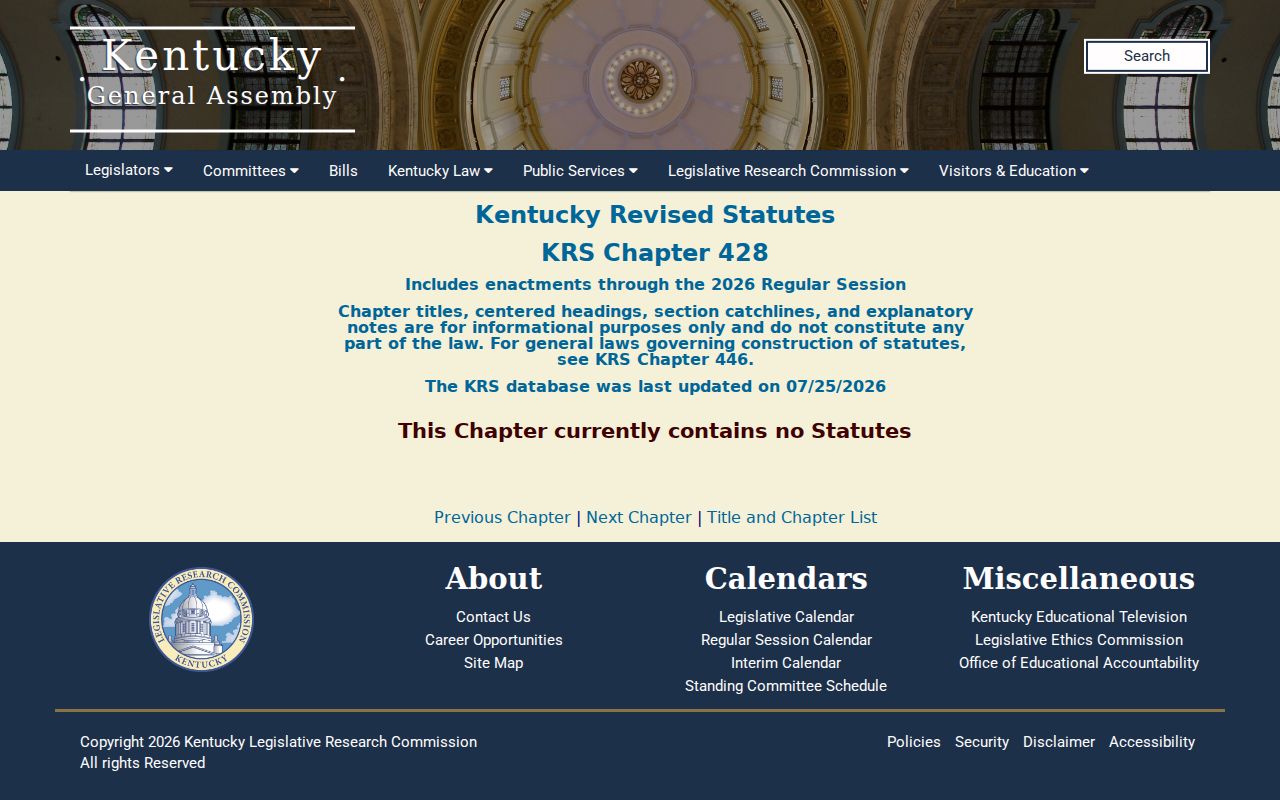
Compare the code on the filed charge with later amended charges and the final disposition. A charge count can exceed the number of cases because one Bullitt County file may contain several original and amended counts.
- Disposition
- The recorded outcome of a charge or case.
- Indictment
- A grand jury accusation that permits a felony prosecution to proceed.
- Diversion
- A structured alternative that may end in dismissal when completed.
- Nolle prosequi
- The prosecutor's formal choice not to continue a charge at that time.
How a Criminal Case Moves
A felony matter may begin in Bullitt District Court with an initial appearance, bond review, and probable-cause stage. A grand jury can then return an indictment, which moves prosecution to Circuit Court. Misdemeanors remain in District Court. At each stage, the prosecutor may amend, dismiss, or replace the allegation. The outcome must be read from the disposition rather than inferred from the first charge.
Case flow: Charges Filed → Arraignment → Pretrial → Plea or Trial → Disposition → Sentencing
Discovery and motions occur during the pretrial period. A plea or trial leads to judgment, followed by a sentence when there is a conviction. An appeal creates another record layer. Appellate matters use Kentucky's C-Track Public Access rather than the Bullitt County clerk's local case search alone.
Bullitt Court Files Sent to Storage
An older Bullitt County criminal court file may no longer be at the public counter. That does not mean the record was erased. Ask the Circuit Court Clerk whether the case was transferred and request the facility name plus the case and file locator numbers. The State Records Center cannot search an archived court file merely by a person's name or Social Security number.
The clerk should remain the first contact because it can identify the correct archive route. A missing public result can also reflect a spelling mismatch, a restricted file, expungement, or data lag. Do not treat silence in a calendar tool as proof that no case exists. If a record is eligible for Kentucky expungement, use the official process and forms instead of assuming age alone removed it.
The Kentucky court forms library supplies current official forms for court matters. The source image below helps distinguish state-issued materials from unofficial copies.
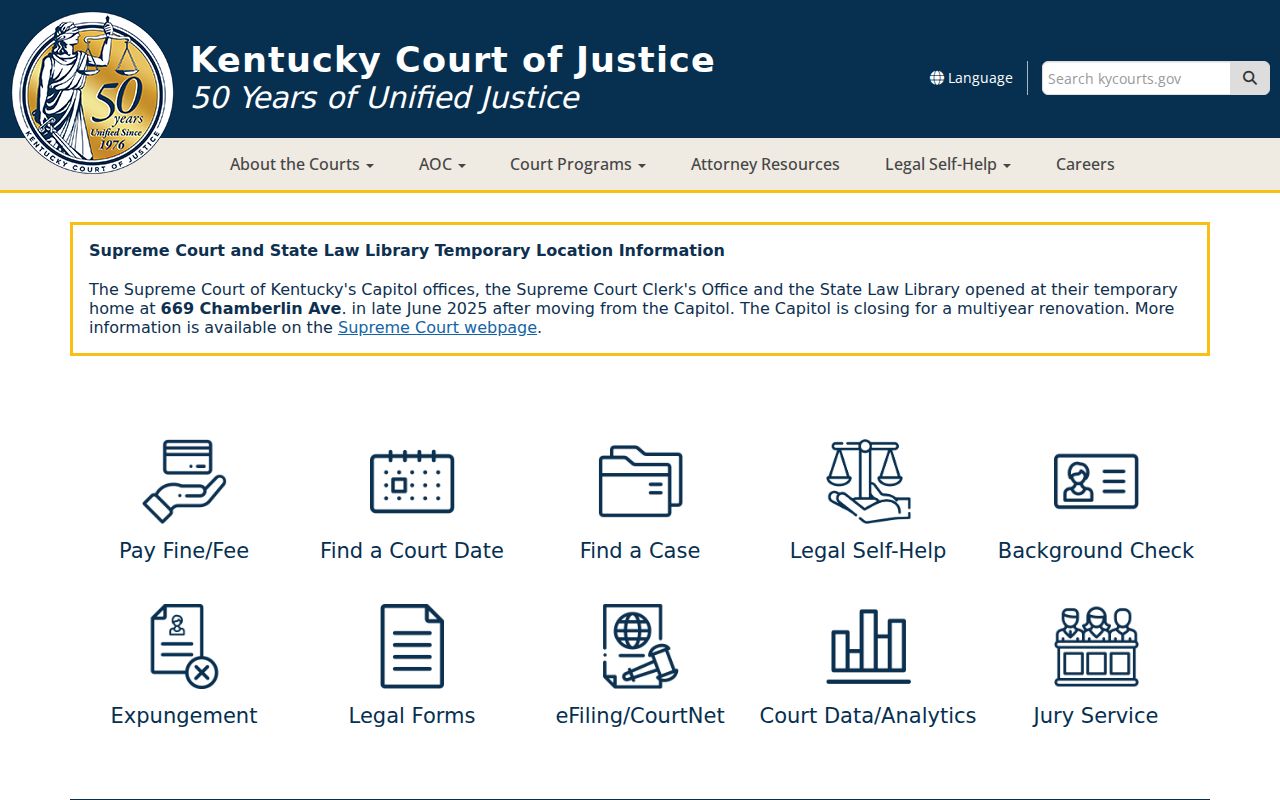
Confirm the needed form and filing route with the Bullitt County clerk. A generic form does not replace the docket, judgment, or certified copy from the originating court.
Case Record Access & Restrictions
The Kentucky Open Records Act opens many nonexempt state and local records, but public access has limits. Juvenile matters, protected victim information, personal identifiers, active investigative details, and expunged records can be restricted or redacted. Court access also follows judicial record rules and the status of the specific file. A signed written KORA request should identify an existing record; it is not a demand that an office answer broad questions.
Request each source from its custodian. The Circuit Court Clerk holds the criminal court case. The jail keeps booking and custody records. The arresting agency holds its incident narrative, subject to investigative limits. Kentucky State Police maintains the centralized repository record. These sources can differ because they answer different questions and update on separate schedules.
Access point: KRS 61.872 provides a route for Kentucky residents to inspect nonexempt records or submit a signed request that describes them. Agencies may redact exempt details from an otherwise separable record.
Copy and certification costs were not published in the Bullitt County research source. Ask the clerk for the current amount before ordering. For a broader view of records created before and after court, use the county's criminal history overview.
Bullitt Court Charges Need Context
The 2024 AOC snapshot grouped Bullitt County Circuit charges into categories that included alcohol and drug, assault and abuse, theft, traffic, sex crime, and administrative groupings. It also tracked outcomes such as amended, convicted, dismissed, diverted, pending, and failure-to-appear processing. Those labels describe court workload, not a list of unique people.
For an individual case, compare the charging document, docket, final disposition, and sentence. A dismissed count and a conviction should never be merged into one vague result. Likewise, an amended charge should be read in sequence. The clerk file provides that timeline and is the right place to confirm the current Bullitt County criminal court record.